
- info@macau.su
- +852 68553629
History of Macau

Macau SAR is a Special Administrative Region of China – Macau aka Macao (30.5 square kilometers) consists of a peninsula
Macau (9.3 square kilometers), which is connected to mainland China, the islands of Taipa (7.6 square kilometers) and Coloane (7.6 square kilometers), as well as the COTAI district (6.0 sq. km). Four bridges connect Macau with Taipei (one of them is 2.5 km, the second is 4.4 km, and the third is 2.1 km, the fourth is 2.8 km)
The population is about 700 thousand people. 95% Chinese, 5% Portuguese.
The official languages are Chinese (Cantonese) and Portuguese.
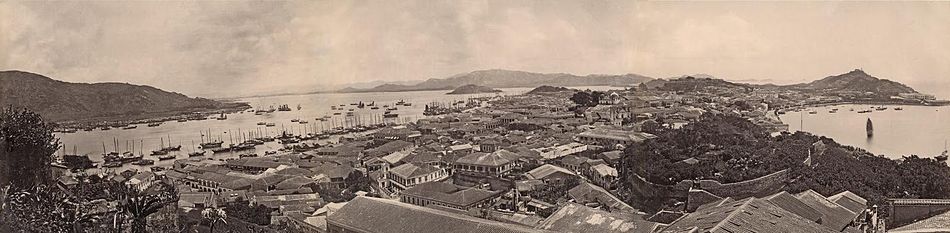
History of Macau
Documentary references to this place date back to the time of the Qin Dynasty (221-206 BC)
Before the arrival of the Portuguese in the 16th century, the city was called Haojing or Jinghai, which means “mirror sea”. The name Macau is believed to have originated from the temple of Matsu, the goddess of sailors and fishermen, built here in 1448. When the Portuguese landed in the immediate vicinity of the temple and asked the locals about the name of the area, they answered them with “Mage” – the temple of Ma. Then the Portuguese named the Macau Peninsula. The modern Chinese name of Macau, Aomin or Aomen, means “entrance gate.”
Fishermen from Fujian and peasants from Guangdong were the first settlers in Macau, formerly known as Ou Mun (Ou Mun or Ao Mun), which means ‘trading gate’. The city got its name due to its geographical location at the mouth of the Pearl River, downstream from the city of Guangzhou (Canton). In ancient times, this port city was part of the Great Silk Road, where silk caravans traveled to the shores of the Old World.
Even after China ceased to play the role of a global trade center, Guangzhou was doing well, thanks to business ties with Southeast Asian countries. It is not surprising that local merchants were happy to see travelers and merchants from Portugal here. Jorge Alvarez was the first to appear in southern China (1513), followed by numerous merchants who began to look for suitable places to trade in China.
At the beginning of the 16th century, the Portuguese reached the shores of Ou Mun, which the locals also called strong A Ma Gao (the abode of the goddess A-We) in honor of the patron goddess of seafarers, whose temple was located at the entrance to the inner harbor. The Portuguese borrowed this name, gradually changing it in their own way – “Macau”. With the permission
of the Mandarins of Guangdong, they built the city, which in a short time turned into the main port of trade between China, Japan, India and Europe.
Macau has also become a wonderful crossroads of Eastern and Western culture. The Roman Catholic Church sent its greatest missionaries here to continue the work of St. Francis (Xavier), who died after converting many Japanese to the Christian faith. Not far from the place now known as the ruins of the Church of St. Peter the Great. St. Paul’s Christian
College was built, where students were trained to work at the Imperial court in Beijing. Many more temples and fortresses were built, giving the city a European look that it is proud of to this day.
The Portuguese golden age in China passed when their rivals, the Dutch and the British, took over the trade initiative. However, the people of Macau continued to do business with the Portuguese. For a century, the British East India Company opened shops and rented houses here. As trade between Europe and China grew, European merchants began to move to Guangzhou, where they bought tea and luxury goods at fairs, and spent their free time in Macau.
Following the Opium War of 1841, the British established a colony in Hong Kong, and most of the foreign merchants left Macau, which turned into a quiet provincial town. However, it still attracted the attention of people from different cultures and, thanks to its remarkable architecture, became a favorite haunt of travelers, writers and artists from all over the world.
On December 20, 1999, Macau came under the jurisdiction of the PRC
One of the biggest problems faced by the Portuguese colonial Government was the high crime rate. The Chinese triads had so much influence that the locals turned to them for help rather than to the police. With the transfer of Macau to China in 1999, the situation improved significantly.
.
Macau’s main Milestones:
1277 – 50,000 people found refuge here from the Mongol invasion, were able to defend themselves and settle down.
1368-1644 A.D. – the Ming Dynasty. Fishermen from the provinces of Guangdong and Fujian migrated here.
1148 A-Ma Temple was built for fishermen to ensure their safety at sea.
There were no large settlements here at that time.
1513 George Alverez sailed to Macau
In 1516, the Viceroy of India, Afonso de Albuquerque, commissioned Rafael Perestrello, Christopher Columbus’ cousin, to travel to China to establish trade relations.
Raphael traded with Chinese merchants in Canton in the same year and in 1516, but he was not allowed to move on.
In 1517, King Manuel I of Portugal sent a diplomatic mission to Canton, led by Tomé Pires and Fernand Pires de Andrade. An embassy was established, but it was rejected by the Chinese court of the Ming Dynasty, which was less interested in foreign contacts, not least because of reports of Portuguese behavior in other parts of China.
In 1520 Pires reached Beijing, was arrested and later died in captivity.
In 1521/1522, several more Portuguese ships reached the trading island of Tuen Moon off the coast of Canton, but were driven away by the Ming Dynasty authorities.
In 1535, after a shipwreck, Portuguese merchants were allowed to anchor ships in the harbors of Macau and were given the right to trade, but not the right to stay ashore. Later, they built several primitive stone houses in the area that is now called Nam Wan.
1540 Relations between the Portuguese and China improved after the Portuguese helped in the battle against pirates.
In 1547, the Chinese authorities granted a monopoly to Portuguese merchants in Macau, banning direct trade with Japan due to piracy by Chinese and Japanese citizens.
The founding year of Macau was 1557.
In 1557, the Ming Dynasty court agreed to establish a permanent Portuguese trading base in Macau.
The annual rent was 500 taels (~20 kilograms (44 pounds) of silver).
The Portuguese built a walled village there, and in 1573 they began paying rent for the land. China retained sovereignty, and Chinese residents obeyed Chinese law, but the territory was under Portuguese rule. In 1582, a land lease agreement was signed, under which annual rent was paid to Xiangshan County.
The Portuguese continued to pay annual tribute until 1863 in order to remain in Macau.
In 1560, Catholic Jesuit and Dominican missionaries began arriving in Macau, which they saw as a gateway for the conversion of the vast population of China and Japan to Christianity.
Both orders soon began building churches and schools, the most famous of which were the Jesuit Cathedral of St. Paul and the Church of St. Dominic, built by the Dominicans.
In 1576, Pope Gregory XIII established the episcopal see in Macau, and Melchior Carneiro was appointed the first bishop.
In 1622, 1,640 Portuguese and Chinese merchants arrived in Macau.
However, there have never been so many Portuguese – only 1,200 out of 26,000 inhabitants.
Portugal’s trade is carried out along three main routes:
Macau – Malacca – Goa – Lisbon
Macau – Manila – Mexico.
The Guangzhou-Macau-Nagasaki route was particularly lucrative, as the Portuguese acted as intermediaries, supplying Chinese silks to Japan and Japanese silver to China, while receiving huge margins.
1622.06.22 – 10 Dutch ships entered the harbor of Macau in order to capture the city.
800 soldiers dismounted and marched towards the main fort of Monte.
There were only 90 locals in Macau at that time, along with 60 Europeans.
The Portuguese fired a cannon and hit the center of the Dutch column – the powder supply.
The column exploded, the Dutch fled, then the locals and the Portuguese ran out and finished them off. 350 Danes were killed.
Since then, Macau celebrated City Day on June 24, until 1999.
There was also the Danish Garden, the place where the Danes were held after their defeat in 1622.
One of the first actions of the first governor of Macau, who took office the following year, was to strengthen the city’s defenses, including the construction of the Gia Fortress. The Danes built walls for the Portuguese.
In 1637, the Shogun shielded Japan from foreign influence due to the increased activity of Spanish and Portuguese Catholic missionaries. Macau’s most lucrative trade route (China – Japan) has been shut down.
(Dutch Protestants were still allowed to trade from Deshima, a small artificial island in Nagasaki.)
In 1639, the Dutch captured Malacca, blocking the trade route to Goa.
The year is 1685. The customs office at the border.the transition was one of the 4 largest in China at that time
In 1685, the Emperor of China opened trade with all foreign countries.
Over the next few years, England, the Netherlands, France, Denmark, Sweden, the United States, and Russia encroached on Portugal’s position.
Trading posts were opened in Guangzhou and Macau.
The Portuguese monopoly on trade is over.
1799 British rule in the 1790s was unsuccessfully challenged by the Franco-Spanish naval squadron during the Macau incident on January 27, 1799.
08/18/19 The British captured Macau during the Opium War
In 1842, China ceded Hong Kong to the British, who began to take away trade from Macau (partly due to the deep-water port of Victoria Harbor).
In 1842, Portugal declared Macau a free port to try to stem the decline in trade. They also expelled Chinese officials and soldiers and began taxing Chinese residents.
1844 Kun-Yama Temple was the place where on July 3, 1844, representatives of the United States and China signed the Wanxi Peace Treaty (named after the village of Mong-Ha, where the temple was located). This marked the official beginning of Sino-American relations..
In 1847, the first gambling licenses were issued. Because Macau was going through a serious financial crisis. Since then, the gambling tax has become Macau’s main revenue.
1848 Boatmen’s Rebellion in Macau.
1849 Macau declared itself a colony of Portugal (officially since 1887)
Portugal gained control of Wanzai Island.
FERREIRA DO AMARAL was killed because he refused to pay rent payments to China.
1849 in August, the Baishaling incident occurred. On August 22, 1849, after the assassination of Governor Ferreira do Amaral by the Chinese, 400 armed Chinese and 20 cannons arrived at the border crossing. The Portuguese perceived this as an attempt by China to retake Macau. 36 Portuguese, including the leader, Second Lieutenant Nicolau Mesquita, repelled the attack.
After that (many years later) He was declared a national hero, awarded the title of Columella (October 27, 1873), and even had a statue erected in Senado Square in his honor.
1849 illegal demolition of city walls
1862 demolition of the wall and Red window gate on Hongchuangmen Street
In 1851 and 1864, the Portuguese annexed the islands of Taipa and Coloane to their possessions.
In 1851-1874, Chinese workers were actively traded in Macau for export to Europe and other countries
In 1883, Macau and East Timor were re-united into an overseas province of Portugal under the control of Goa.
In 1887, China and Portugal signed the Lisbon Protocol, which confirmed the “permanent occupation and administration” of Macau by Portugal.
In 1887, Portugal relinquished control of Wanzai Island.
In 1890, Ilkha Verde Island was annexed to the colony. And in 1923, it was physically annexed to the Macau Peninsula as a result of land reclamation.
In 1871, Kiang Wu Hospital was founded as a traditional Chinese medical hospital.
In 1892, Dr. Sun Yat-sen brought Western medicine services to the hospital.
In 1897, Macau was granted the status of a separate colony of Portugal.
May 1912. Sun Yat Sen visited Macau. At one time he worked as a doctor in the hospital and saw patients.
In August 1943, Japanese troops captured the British steamer Xian in Macau and killed about 20 guards. The following month, they demanded the appointment of Japanese “advisers” as an alternative to military occupation.
As a result, a virtual Japanese protectorate was created over Macau.
Japan established a protectorate over Macau, but did not actually occupy it.
Portugal remained neutral in the war between China and Japan.
In 1945, when it became known that neutral Macau was planning to sell aviation fuel to Japan, planes from the American aircraft carrier Enterprise bombed the hangar of the Naval Aviation Center on January 16, 1945 and fired on it to destroy the fuel. American air raids on targets in Macau were also carried out on February 25 and June 11, 1945.
Japanese rule ended in August 1945.
1950, Following a protest by the Portuguese Government, the United States paid the Portuguese Government $20,255,952.
1949 The Chinese Communists came to power.
The Lisbon Protocol of 1887 was invalidated as an “unequal treaty” imposed on China by foreigners. However, Beijing was not ready to settle the issue of concluding a treaty, postponing the preservation of the “status quo” until a more appropriate time.
In 1951, the Salazar regime declared Macau, like other Portuguese colonies, an “overseas province” Portugal.
1952 At the main border. There was a major border incident at the Portas do Cerco crossing when Portuguese African troops exchanged fire with Chinese Communist border guards. The shootout lasted for almost two hours, resulting in one death and several dozen injuries on the part of Macau, and more than 100 casualties on the part of Communist China.
In 1954, the Macau Grand Prix was established, first as a treasure hunt throughout the city, and in subsequent years even as an official car race.
In 1962, a major breakthrough occurred in the Macau gambling industry when the government granted the Macau Tourism and Entertainment Society (STDM), a syndicate jointly established by businessmen from Hong Kong and Macau, monopoly rights to all types of gambling. STDM introduced Western-style games and modernized the maritime link between Macau and Hong Kong, attracting millions of players annually from Hong Kong
The year is 1966. Riots broke out during the Communist Cultural Revolution, when clashes broke out between local Chinese and the Macau authorities, the most serious of which was the so-called incident 12-3. The riots were provoked by the overreaction of some Portuguese officials to the usual petty dispute over building permits. As a result of the riots, 8 people died, and as a result, the Portuguese government was completely removed from power.
In 1967, the Portuguese governor signed a paper apologizing to China and paid 2 million patacas to the local Chinese community. The Guomindang movement to Macau was stopped. Portugal wanted to transfer Macau to China, but China refused.
1968 is a big event! A road was built between Taipa Island and Coloane
1974 Governor Nobre de Carvalho Bridge built
1974 After the anticolonial carnation Revolution, Portugal renounced all claims to Macau and offered to return it to Chinese sovereignty.
1979.02.08 Lisbon and Beijing established diplomatic relations, and Macau became considered a “Chinese territory under Portuguese provisional administration.
” 1980 Governor of Macau Gen. Melo Egidio arrived in Beijing
1986 May one of the discussions on the status of Macau
1987 The Joint Declaration on Macau was signed on April 13, 1987, and it was decided that Macau would become part of China on December 20, 1999.
1994 The second bridge was built – Amizade Bridge 澳門友誼大大
1995 the airport
was built 1997 the Macau Stadium was built in the Taipa area
1999.12.20 transfer of Macau to China. For the next 50 years, “One country, two systems”
2002 Ended the casino monopoly. Now the government of Macau has issued 3 licenses (later 6).
2004 The Sai Van Bridge was built (the third in a row)
2005 The Historical Center of Macau (25 sites) was added to the World Heritage List on July 15, 2005, becoming the 31st World Heritage Site in China. This international recognition contributes to the fact that the city’s population is even larger.
It values its cultural heritage, which has a beneficial effect on the implementation of programs for the restoration of the city and the protection of local cultural values.
The Venetian Macau Casino, the largest in the world, was built in 2007.
.
Alex iurlov – your tour guide in Macau, Hong Kong and China!
+852 68553629 (WhatsApp, Telegram, Wechat)
Wechat id: iurlov
info@macau.su
109 total views, 2 views today